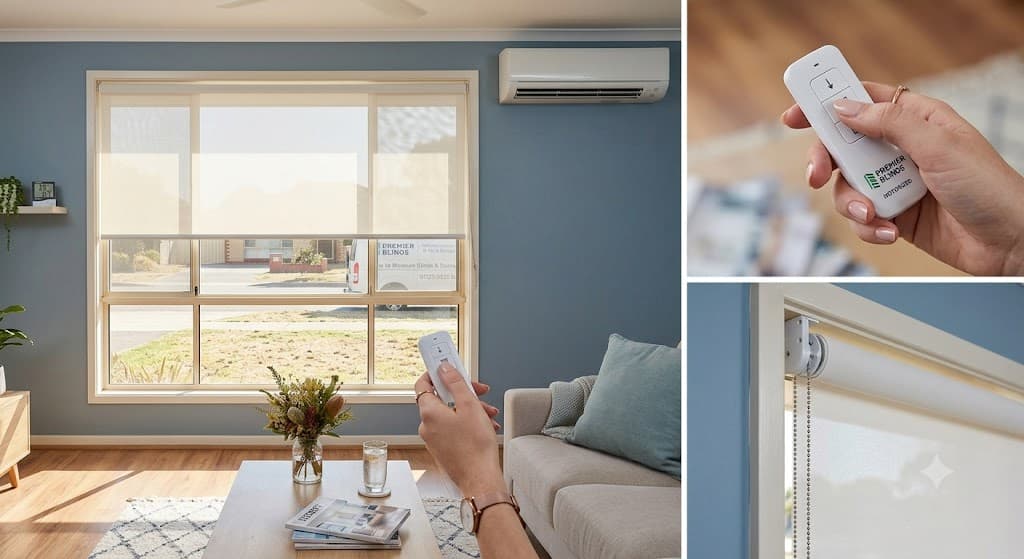
Are Motorised Blinds Worth It? An Honest Look at the Pros and Costs
Motorised blinds cost more upfront — but for the right windows and the right home, they pay for themselves in convenience and liveability. Here's when they make sense.
Motorised blinds cost more than manual ones — sometimes significantly more. Whether that extra cost is worth it depends on your windows, your lifestyle, and what you value in a home. Here’s an honest breakdown.
What you’re actually paying for
When you upgrade to motorised blinds, you’re primarily paying for a motor and its control system. Battery-powered motors add the least cost and complexity; mains-wired motors are more expensive to install (because of the electrical work) but require no battery changes. Smart motors that integrate with Apple HomeKit, Google Home, or Amazon Alexa cost more again.
The blind itself — the fabric, the cassette, the installation — is essentially the same regardless of whether it’s motorised. The motorisation is an add-on to the mechanism.
When motorised blinds genuinely pay off
Hard-to-reach or high windows. If your windows are above head height, over a staircase, or in a high-ceilinged space, manually operating them with a cord or wand becomes a real inconvenience — or simply impossible. Motorisation solves this completely. For these windows, the convenience argument is hard to argue against.
Large or heavy blinds. Wide-format blinds — for large living room windows, bi-fold doors, or commercial glazing — can be heavy and awkward to operate by hand. A motor makes them effortless, and also reduces wear on the mechanism over time.
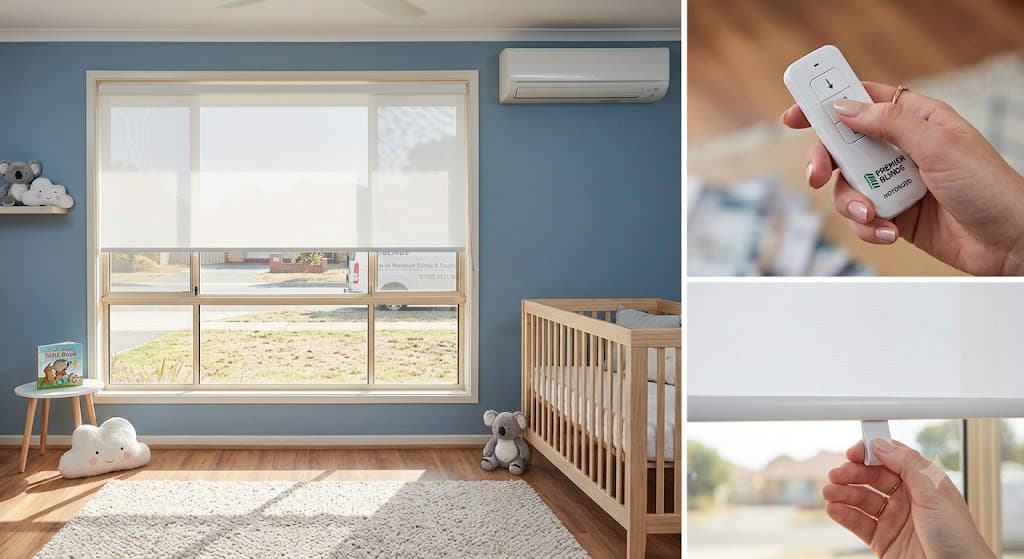
Homes with children. Motorised or cordless blinds eliminate looped cords entirely — which are a documented safety hazard for children. In homes with young children, the safety benefit alone can justify the upgrade. See our guide to child-safe blinds in Australia for more detail.
Smart-home households. If you already use Apple HomeKit, Google Home, or Amazon Alexa, motorised blinds fit naturally into your ecosystem. The ability to include blinds in automations — “close the west-facing blinds at 3pm”, or “open all blinds when I wake up” — adds real daily value. This is where motorised blinds shift from a luxury to a practical tool.
Rooms with many windows. If you have a sunroom or open-plan space with six or eight windows, operating all of them manually every morning and evening becomes a genuine chore. Motorisation lets you do it in a single tap or voice command.
When the extra cost might not be justified
For a single, easily-reached bedroom or living room window with no smart-home ecosystem and no children in the home, the case for motorisation is weaker. A good manual roller blind with a reliable spring or chain mechanism operates smoothly for years and costs considerably less. If you’re working to a tight budget, manual blinds are not a compromise — they’re a perfectly good choice.
Battery vs mains-wired: what to choose
Battery-powered motors are the lower-cost, lower-disruption option — no electrician required, and they can be installed in rentals. The batteries typically last one to two years depending on use, and recharging or replacing is straightforward. For most residential applications, battery motors are entirely adequate.
Mains-wired motors are the long-term, low-maintenance option — once installed, there’s nothing to recharge or replace. They’re worth considering for installations where battery access would be awkward (very high windows, for example) or for commercial environments where ongoing battery maintenance isn’t practical.
Can existing blinds be motorised?
In some cases, yes — retrofit motor kits are available for certain roller blind mechanisms. Whether your existing blinds can be motorised depends on the brand, the mechanism, and the motor system being used. A specialist can assess this during an in-home visit. If your existing blinds are otherwise in good condition, retrofit motorisation can be a cost-effective way to upgrade without replacing the whole blind.
The bottom line
Motorised blinds are worth it if you have high or hard-to-reach windows, young children in the home, or a smart-home ecosystem you want to extend. For standard, accessible windows in a home without those factors, a quality manual blind is a sensible and cost-effective choice.
The best way to decide is to discuss your specific windows and needs with a specialist in person. Request a free in-home measure and quote and they’ll give you an honest assessment of where motorisation adds value for your home.
Ready for a free measure & quote?
Tell us what you need — we'll match you with a vetted local specialist and arrange a free in-home visit. No obligation.
Get a Free Quote