How to Reduce Heat Through Your Windows With the Right Blinds
Windows are the biggest source of summer heat gain in most Australian homes. Here's which blind types make the biggest difference — and which rooms they suit best.
Windows are the biggest source of unwanted heat gain in most Australian homes. On a hot summer day, an unshaded west-facing window can push your indoor temperature up by several degrees — and no amount of air conditioning fully compensates for heat radiating off glass directly into your living space. The right blind, fitted to the right window, makes a real difference.
Here’s a practical guide to the blind types that work hardest against the Australian summer, and which rooms they suit best.
Honeycomb blinds: best all-round insulation
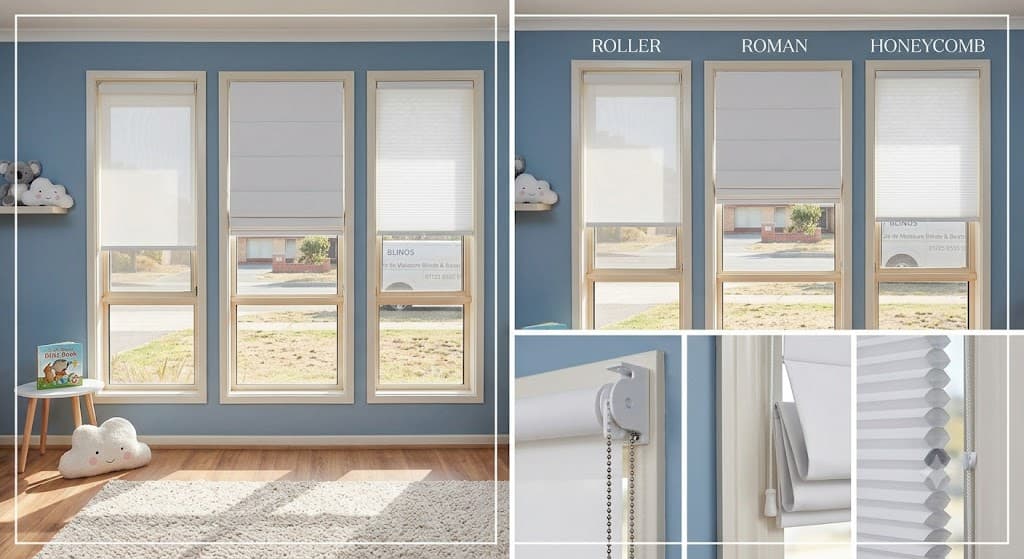
Honeycomb (cellular) blinds are consistently the highest-performing option for both heat reduction and year-round thermal comfort. The blind’s distinctive honeycomb cross-section traps air in its pockets, creating an insulating barrier between the window glass and your room. In summer, this slows the transfer of heat from hot glass into the interior; in winter, it does the reverse — keeping warmth from escaping through cold windows.
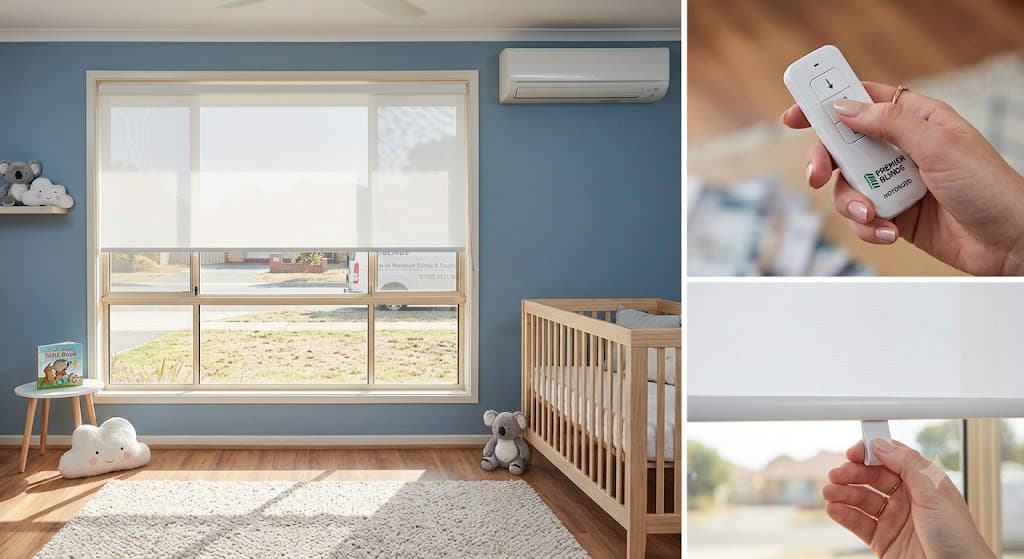
Honeycomb blinds come in blockout and light-filtering fabric variants. Blockout is ideal for bedrooms where summer heat accumulation at night makes sleeping uncomfortable. Light-filtering variants work well in living areas where you want insulation without losing all natural light.
Double-cell and triple-cell constructions provide progressively better insulation than single-cell, though single-cell is still a significant improvement over a standard flat-fabric blind. For very hot or west-facing rooms, double-cell is worth the modest additional cost.
Blockout roller blinds: darkness and heat combined
A quality blockout roller blind doesn’t have the insulating structure of a honeycomb blind, but it does block all solar radiation through the glass — and that makes a meaningful difference in rooms that overheat. Bedrooms, especially those with east or west-facing windows that take morning or afternoon sun, benefit significantly from blockout blinds that prevent the room from heating up before you need it cool.
The key for blockout rollers is side fit: gaps between the blind and the window frame let light and heat in around the edges. A well-measured, tightly fitted blockout roller is considerably more effective than one with large gaps on either side. Your specialist will measure for a close fit during the in-home quote visit.
Sunscreen roller blinds: glare reduction with views
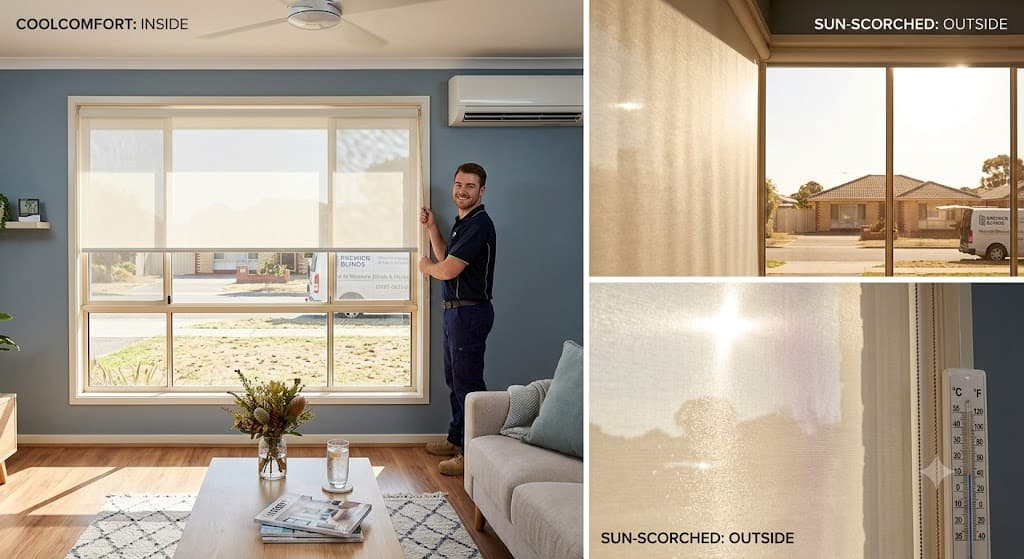
Sunscreen fabrics are woven with small openings — typically between 1% and 10% open — that cut glare and UV while preserving your view and allowing natural light into the room. They reduce solar heat gain through the glass without making the room feel closed in.
For living areas with views you don’t want to block — a garden, a skyline, a water view — a sunscreen roller is often the right compromise. Tighter weaves (1–3% openness) are more effective at heat and glare reduction; more open fabrics (5–10%) feel more transparent and light-filled. Your specialist can show you fabric samples so you can see exactly what the effect looks like before you commit.
Note that sunscreen fabrics don’t provide full privacy at night when interior lights are on — if that matters for your space, discuss it with your specialist.
Outdoor blinds: intercept heat before it reaches the glass
The most effective way to keep a room cool is to stop solar heat before it passes through the glass entirely. Outdoor blinds — whether zip-track systems or café blinds — do exactly this. By shading the exterior of the window, they intercept the sun’s energy before it has any contact with the glass.
For alfresco areas with large openings, outdoor blinds also extend the usable space into summer by blocking afternoon sun from the western aspect. Zip-track systems are the most effective because the side guides keep the fabric sealed against the edges — no gaps for heat to sneak in.
If your main concern is an alfresco or patio area that becomes unusable in summer heat, outdoor blinds will make more difference than any interior solution.
Which rooms should you prioritise?
West-facing rooms are almost always the highest priority in Australian homes — they take the harshest afternoon sun and tend to be uncomfortably hot from mid-afternoon into the evening. East-facing bedrooms are a close second, because they heat up in the morning and don’t cool down quickly.
North-facing rooms get consistent sun year-round and benefit from blinds that can be adjusted easily — a honeycomb or sunscreen roller on a smooth-operating mechanism that you actually use. South-facing rooms in Australian homes typically get little direct sun and are less of a priority.
Ready to get started?
The best way to choose is with a specialist who can assess your windows in person — the orientation, the glazing type, and the room’s use all affect which solution will work best. Request a free in-home measure and quote and a vetted local specialist will advise you on the right blind for each window.
Ready for a free measure & quote?
Tell us what you need — we'll match you with a vetted local specialist and arrange a free in-home visit. No obligation.
Get a Free Quote