Roller vs Roman vs Honeycomb Blinds: Which Is Right for Your Room?
Three popular blind types, very different strengths. A practical comparison by room, light control, cost, and insulation so you can choose with confidence.
Roller, roman, and honeycomb blinds are three of the most popular window covering choices in Australian homes — but they serve quite different purposes, suit different rooms, and come with different price points. Here’s a practical comparison to help you decide.
Roller blinds — the versatile everyday option
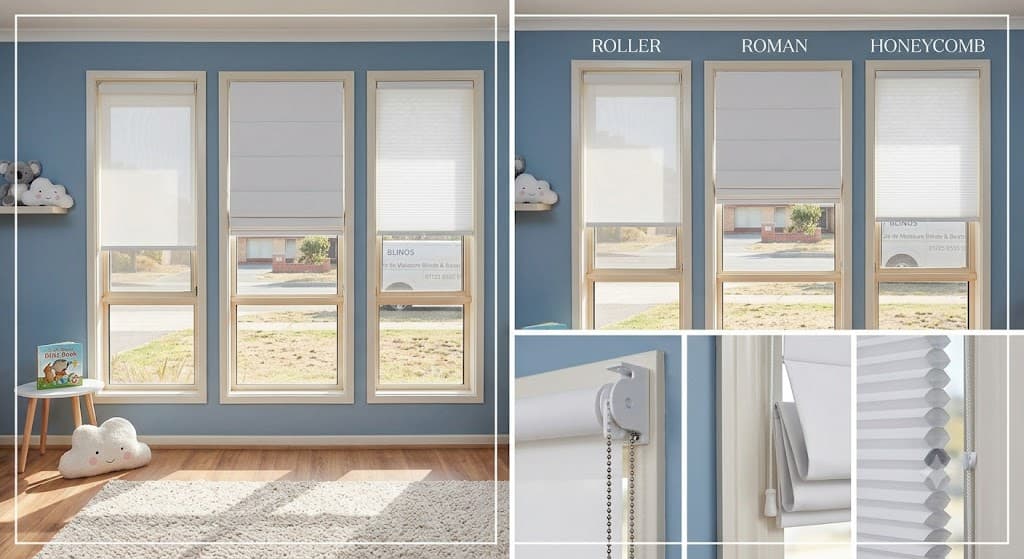
Roller blinds are simple, clean, and available in an enormous range of fabrics. A single fabric panel rolls up onto a tube at the top of the window — that’s essentially it. This simplicity makes them reliable, easy to clean, and easy to repair or replace if something goes wrong.
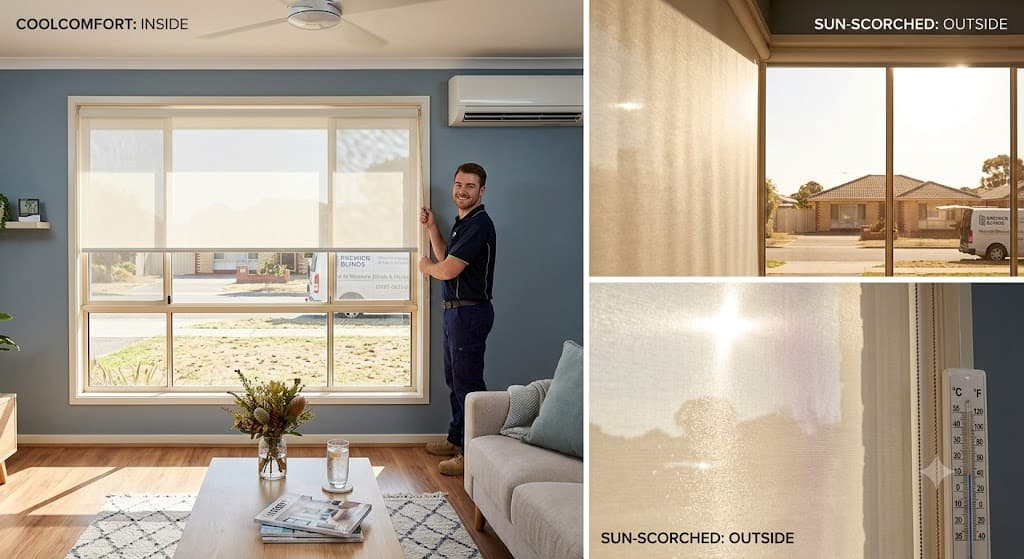
Light control: Excellent range — from sheer sunscreen fabrics (which cut UV and glare while preserving your view) through light-filtering options to full blockout. The fabric choice determines the light control, so you can get exactly what you need for any room.
Insulation: Limited. A flat fabric panel has no insulating structure. Blockout rollers reduce solar heat gain by blocking sunlight, but they don’t insulate against temperature transfer through cold or hot glass.
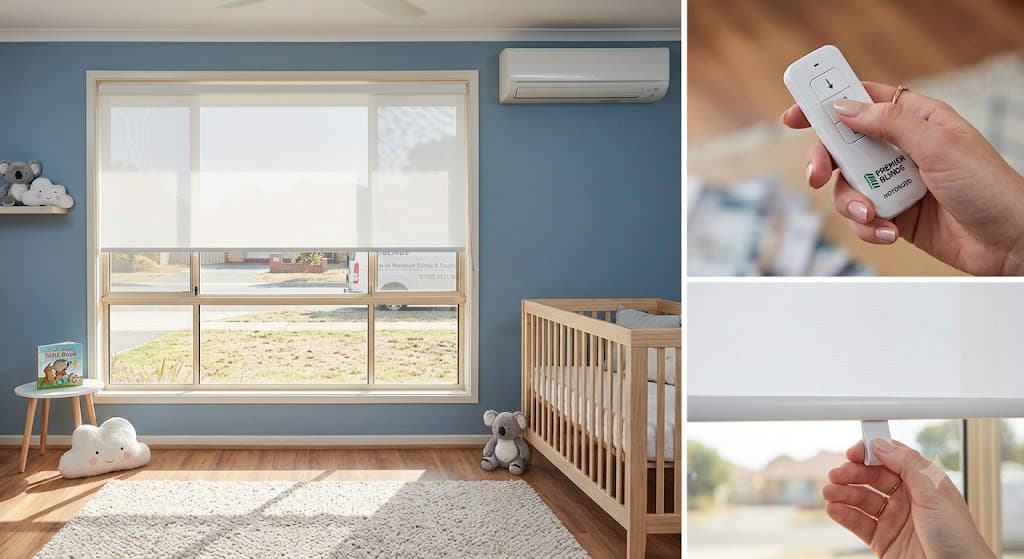
Best for: Bedrooms (blockout), living areas with views (sunscreen), kitchens and bathrooms (moisture-resistant fabrics), any room where clean, minimal aesthetics are preferred.
Cost: Generally the most affordable option, especially for standard window sizes.
Roman blinds — the soft, decorative choice
Roman blinds stack into horizontal fabric folds when raised, creating a soft, tailored look that suits interiors where you want the blind itself to be a feature. They sit flat against the window when lowered, similar in profile to a roller blind.
Light control: Depends entirely on the fabric chosen. Romans can be made in sheer, light-filtering, and blockout fabrics, giving you a similar range of light control to rollers. However, fabric choice affects the aesthetics significantly — blockout fabrics tend to look heavier and less refined than light-filtering options.
Insulation: Slightly better than rollers in light-filtering and heavier fabrics due to the additional fabric layers when stacked, but this is marginal. Romans are chosen primarily for their look, not their thermal performance.
Best for: Living rooms and dining rooms where soft, textured fabrics complement the interior design. Studies, home offices, and spaces with a traditional or warm aesthetic. Not typically recommended for wet areas or bathrooms.
Cost: Generally more expensive than rollers, reflecting the additional fabric and more complex construction. Custom fabrics can make Romans significantly more expensive.
Honeycomb blinds — the thermal specialist
Honeycomb (cellular) blinds are purpose-designed for thermal performance. The cellular cross-section traps air in honeycomb-shaped pockets, creating an insulating layer between the window and the room. No other commonly available blind type provides comparable insulation.
Light control: Excellent. Available in blockout and light-filtering variants. The top-down/bottom-up configuration (where the blind can be raised from the bottom or lowered from the top) is a popular option that allows privacy at eye level while admitting light from above.
Insulation: The standout in this comparison. Honeycomb blinds meaningfully reduce heat transfer through windows in both summer and winter. For south-facing rooms that lose heat through cold glass in winter, or west-facing rooms that overheat in summer, the thermal benefit is real and felt year-round.
Best for: Bedrooms (year-round thermal comfort), rooms with cold-oriented windows, living areas in climates with hot summers or cold winters. An excellent choice for anyone focused on reducing heating and cooling costs.
Cost: More expensive than rollers; comparable to quality romans. Double-cell and triple-cell constructions cost more than single-cell. The running cost savings from reduced heating and cooling can offset the higher purchase price over time.
Quick comparison summary
| Factor | Roller | Roman | Honeycomb |
|---|---|---|---|
| Light control range | Excellent | Good | Excellent |
| Thermal insulation | Low | Low–medium | High |
| Aesthetic | Clean, minimal | Soft, decorative | Clean, functional |
| Cost | $ | $$ | $$ |
| Wet area suitability | Yes (right fabric) | Limited | Yes (right fabric) |
Which should you choose?
For most Australian bedrooms, a blockout roller or honeycomb blind covers all the bases — roller if cost is the priority, honeycomb if thermal comfort and sleep quality are the focus.
For living areas where aesthetics matter and the blind is a feature, romans earn their place. For rooms where heat or cold is the main problem, honeycomb is the clear choice.
Still unsure? The best way to decide is with samples in your space. Request a free in-home measure and quote — your specialist will bring samples and can advise on what works for your specific windows, orientation, and budget.
Ready for a free measure & quote?
Tell us what you need — we'll match you with a vetted local specialist and arrange a free in-home visit. No obligation.
Get a Free Quote